Plan Ahead for Extra 10% Off
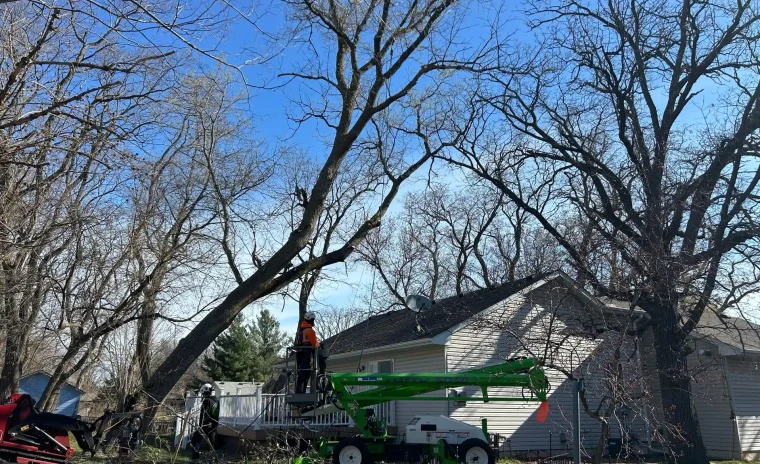
Timing Your Cuts for Minnesota’s Growing Season
In Little Falls, the window for safe pruning opens later than many property owners expect. Our last hard freeze typically arrives in mid-April, which means you should hold off on heavy pruning until late April or early May when trees have begun actively growing. Pruning too early stimulates new growth that late-season frosts can damage, setting your trees back weeks or even months in their seasonal development.
Summer pruning serves a different purpose than dormant-season work. Between June and August, light corrective cuts help manage excessive canopy density and redirect energy away from water sprouts or crossing branches. This is the ideal time to thin crowded interior branches on maples and oaks, which dominate our local landscapes. Removing about 15 to 20 percent of the canopy allows better air circulation, reducing the humidity that encourages fungal infections during our humid July and August weather patterns.
Always make your cuts just outside the branch collar, the slightly swollen area where the branch meets the trunk or parent limb. Flush cuts that remove this collar damage the tree’s natural defense system and invite decay. For branches larger than two inches in diameter, use the three-cut method: an undercut first to prevent bark tearing, a top cut several inches out to remove the bulk of the branch, and a final cut at the proper angle just beyond the collar. If you are managing multiple mature trees or dealing with overhead power lines, our tree trimming and pruning services can handle the work safely and on the right seasonal schedule.
Early Detection Saves Trees and Money
Oak wilt remains one of the most destructive threats in Morrison County. This fungal disease spreads rapidly through root grafts between nearby oaks and through sap-feeding beetles that visit fresh wounds during the April through July high-risk period. If you notice leaves browning from the outer edges inward, starting at the top of the canopy and progressing downward, you may be looking at the early stages of oak wilt. The disease can kill a mature oak within weeks once symptoms appear, so immediate action is critical.
Emerald ash borer has established populations throughout central Minnesota, and Little Falls properties with ash trees face ongoing risk. Look for D-shaped exit holes in the bark, vertical splits in the trunk, and increased woodpecker activity, all of which signal an active infestation. Ash trees showing canopy dieback of more than 30 percent are often beyond saving, but trees caught earlier may respond to systemic treatments applied by certified professionals.
Fungal issues thrive in our climate, especially after wet springs. Anthracnose commonly affects our ash, oak, and maple populations, creating irregular brown blotches on leaves and premature defoliation. While rarely fatal, repeated years of severe infection weaken trees and make them vulnerable to secondary problems. Improving air circulation through selective pruning and removing fallen infected leaves each autumn reduces disease pressure for the following season. Tar spot, another fungal problem, produces distinctive black spots on maple leaves in late summer. Though unsightly, it rarely requires treatment beyond good sanitation practices. For persistent or spreading disease issues, consulting with professionals who understand local disease ecology can prevent small problems from becoming landscape-wide failures.
Building Strong Root Systems from Day One
The first three years after planting determine whether a tree will thrive for decades or struggle throughout its life. In Little Falls, our clay-heavy soils present drainage challenges that many property owners underestimate. When planting, dig a hole two to three times wider than the root ball but no deeper. Setting a tree too low encourages root collar rot, while planting too high exposes roots to temperature extremes. The top of the root flare, where the trunk begins to widen at the base, should sit level with or slightly above the surrounding grade.
Watering strategy matters more than watering frequency. Newly planted trees need deep, infrequent watering that encourages roots to grow downward rather than staying near the surface. During the establishment period, provide about 10 gallons of water per week for every inch of trunk diameter, delivered slowly at the drip line rather than against the trunk. Our typical summer dry spells in late July and August stress young trees significantly, so maintain consistent watering even when mature trees appear fine. A soaker hose arranged in a spiral around the drip line delivers water efficiently without runoff.
Mulch serves multiple functions but only when applied correctly. Spread two to four inches of wood chip mulch in a ring extending to the drip line, keeping the mulch several inches away from the trunk itself. The volcano mulching technique, where mulch is piled against the trunk, traps moisture against the bark and creates ideal conditions for disease and insect damage. Refresh the mulch layer each spring as it decomposes, which also improves soil structure over time. Avoid weed fabric or plastic barriers underneath, which interfere with natural soil processes and root expansion. Professional tree planting services handle these details correctly from the start, giving young trees the foundation they need to mature into valuable landscape assets.
Protecting Your Investment as Trees Age
Trees that have reached maturity require different care than younger specimens. In Little Falls, our heavy snow loads and occasional ice storms place tremendous stress on large canopies, especially on older maples and elms with codominant stems or weak branch unions. These structural vulnerabilities often develop over decades and go unnoticed until a storm causes catastrophic failure. Annual inspections should focus on crotch angles less than 45 degrees, included bark between major stems, and any visible cracks or splits in the trunk or primary scaffold branches.
Cabling and bracing systems provide mechanical support that extends the safe lifespan of structurally compromised trees. When two or more trunks emerge from a single point, the union often lacks the interlocking wood fibers that create strong attachments. Installing flexible steel cables in the upper canopy redistributes mechanical loads and prevents the stems from splitting apart during wind or ice events. Rigid bracing rods through the trunk may be necessary for trees with active splits or where two stems are already beginning to separate. These interventions are not cosmetic fixes but engineering solutions that protect property and preserve valuable mature trees that would otherwise require removal.
Deadwood removal becomes increasingly important as trees age. Dead branches shed their bark and become brittle, breaking unpredictably during storms or even on calm days. In residential settings, these falling limbs pose obvious hazards to people, vehicles, and structures. Many property owners delay this maintenance because the tree still looks healthy overall, but a single large dead branch suspended 40 feet above a driveway represents a significant liability. Regular crown cleaning every three to five years keeps mature trees safe and attractive. For large trees or those near buildings and power lines, professional cabling and bracing services provide the structural support and safety clearance that DIY approaches cannot achieve.
Understanding Risk, Timing, and Long-Term Value
Height and proximity to structures or power lines are the clearest indicators that professional help is necessary. Any work requiring a ladder taller than 12 feet or positioning yourself beneath the branch you are cutting creates serious injury risk. In Little Falls, we see several homeowner accidents each year involving falls from ladders or branches that fell unpredictably. Homeowner’s insurance may not cover injuries sustained during tree work if proper safety equipment and training were not employed, leaving you personally liable for medical costs and lost income.
The cost objection deserves honest examination. A professional pruning or removal project may run several hundred to several thousand dollars depending on tree size, location, and complexity. But consider the alternative costs: emergency room visits for chainsaw injuries, property damage from dropped branches, liability claims from neighbors, and the expense of removing a dead tree that could have been saved with earlier intervention. Additionally, improper pruning techniques reduce property values and may require corrective work that costs more than doing it right initially. Certified arborists carry liability insurance, workers’ compensation coverage, and specialized equipment that distributes risk appropriately rather than concentrating it on you personally.
Timing considerations also favor professional involvement. Disease diagnosis and treatment windows are narrow. Oak wilt prevention requires pruning outside the April through July beetle flight period, but property owners often do not recognize the risk until after damage occurs. Hazardous tree removals near homes or utilities demand precision rigging and planning that develop through years of fieldwork, not YouTube tutorials. Storm damage response requires immediate action, often when you are dealing with insurance claims and other priorities. If you are uncertain about your trees’ health, structural integrity, or maintenance needs, we invite you to connect with our team for an assessment. You can also review examples of our completed projects in our work gallery to see how we approach various tree care challenges throughout Little Falls and Morrison County.